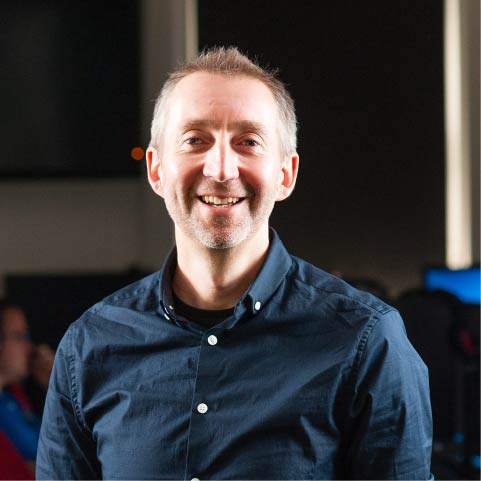
DR RICHARD COOK (PROJECT LEAD) rcook@glos.ac.uk
USING AI AND DIGITAL TECHNOLOGY TO TACKLE FAST-LITTER
The University of Gloucestershire is funding research that aims to tackle fast-litter by bringing together local district councils, retail brands and community groups using AI and digital technologies.
This research is important because our pilot study revealed that not only is fast-litter a recent phenomenon there doesn't yet seem to be a collective and joined up approach to tackle it.
We have defined fast-litter as on-the-go food and drink packaging discarded from vehicles usually in peri-urban or rural areas.
It is now common to see fast-litter in nature reserves, areas of outstanding natural beauty, hedgerows, waterways and fields where crops grow.
FAST-LITTER CORRIDORS AND HOTSPOTS
We identified a new type of consumer behaviour and coined the phrase 'fast-litter'. We also identified 'litter corridors' and 'litter hotspots'.
Our initial findings revealed that fast-litter can be found on roads and lanes travelling away from on-the-go outlets which we defined as 'corridors.
Alongside this we also established that certain places see regular reoccurences of fast-litter after it has been cleared away we which defined as 'hotspots'.
We were able to show that fast-litter can travel kilometers from outlets, across District boundaries meaning it isn't a localised problem but one which needs collective conversations.
Our mission is to provide research informed evidence and University support to help create a nationwide alliance to start collective conversations.
We see our role as supporting local and individual efforts to inform change.
COLLECTIVE EFFORTS AND CONVERSATIONS
Mintel identifies the expansion of drive-throughs as a critical driver for the UK fast food market, which is projected to reach £40.5bn by 2025.
As dine-in and standard takeaway habits stabilise, future growth is increasingly tied to enhancing convenience through these channels.
With the drive-thru market expanding and car numbers also increasing, our objectives are to bring together policy makers, communities and brands and use AI and technology to support planning and action.
We provide a free mobile phone app that can be used to log fast-litter and which records contextual data.
Alongside this, we provide an AI powered digital dashboard service that uses data science to produce insights such as quantities, common locations, and date patterns.
Our technology gives litter pickers power by informing brands and policy makers.
If you would like to get in touch please contact the Project Lead Dr Richard Cook (rcook@glos.ac.uk) or sign up for project alerts below...
RECEIVE NOTIFICATIONS VIA EMAIL HERE
Read this explainer here and please free free to share it: fast-litter explainer
Mintel’s latest research indicates that the fast food market is experiencing a significant "premiumisation" shift, with the
UK market alone projected to grow by £10.8bn by 2030.
Despite economic pressures, consumers are increasingly viewing fast food as an "affordable indulgence" rather than just a budget necessity.
Drive-throughs are a primary method for major brands to expand their reach and improve operational efficiency.
While takeaway orders fell slightly to 72% in 2024, Mintel emphasizes that drive-throughs, along with click-and-collect, are essential
for catering to "time-pressed" consumers, especially families.
The sector is shifting toward AI-powered drive-throughs to increase speed and personalization.
Brands are already piloting these technologies to streamline the ordering process.
Young, busy families are the most frequent users, driving off-peak demand through these convenient collection points.
Brands are heavily utilizing drive-through formats for its UK expansion. Established players continue to use their extensive drive-through
networks to maintain a dominant market share over competitors with more limited physical formats.
58% of consumers aged 16–34 expressed interest in AI-powered recommendations, a feature being integrated into modern drive-through digital menu boards.
There is a growing demand for "mix-and-match" options and personalised deals delivered via mobile apps during the drive-through experience
IMAGE DETECTION AND DATA SCIENCE
We have developed a technical pipeline that leverages the power of AI and digital technologies to support public action.
Our mobile phone app allows photographs of fast-litter to be automatically tagged and geo-located, which along with contextual comments, is run through
AI models and mapped. Not only this but powerful data science techniques automatically generate insights historically and through predictive modelling.
THE PROJECT & RESEARCH TEAM
(PROJECT LEAD) DR RICHARD COOK
My research interests are sociological and focus upon people and technology. Having technical expertise and skills in a wide range of traditional and emergent technologies, and a curiosity about people’s motivations and behaviours,
I collaborate on interdisciplinary research. I have studied cyclists, graffiti artists, large language
AI models, and schools.
Prof. Philippa Ward
I have over 25 years of experience in retail and academia.
My research centres on the effects of situational factors on consumers, the psychological and sociological determinants of consumption,
and the exploration of value. I have explored a diverse range of issues, spanning how and why we consume, our connections with technology,
and our relationship with finance. At the core is appreciating how these experiences shape us – our vulnerabilities and well-being –
and how we, in turn, affect our environment. I am a passionate advocate for the application of a broader range of methods in research and for
transdisciplinarity. These approaches enable us to gain insights and propel our understanding.
DR RUFFIN RELJA
My professional and academic career spans over 20 years predominantly in the global luxury industry.
In my roles as brand and business development lead, I gained a profound understanding of the stretching and retrenching of brands,
including the management of brand/product portfolios across lifecycles – applying the full marketing mix. This provides a valuable
backdrop for my academic practice and research activities.
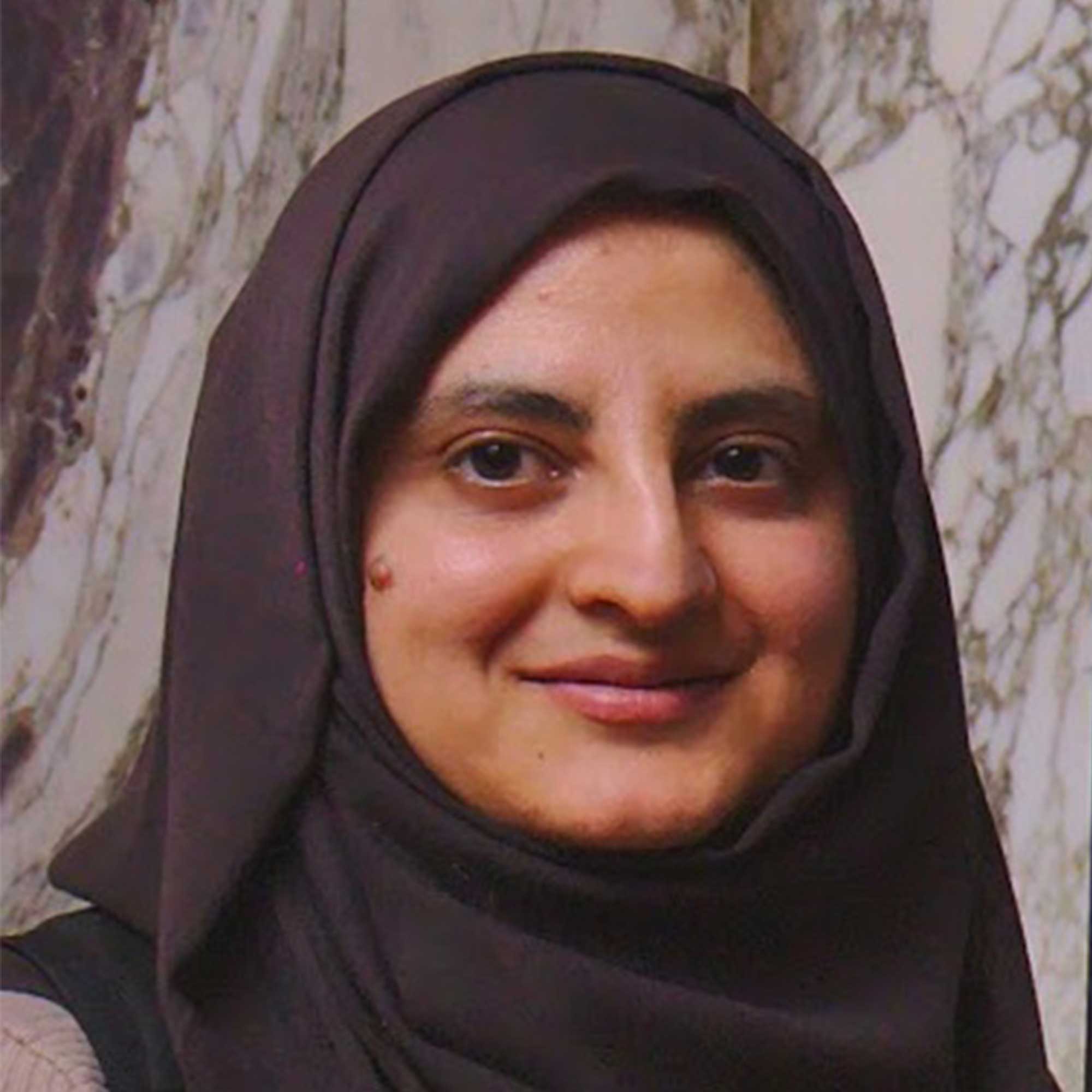
DR MAH-RUK FIDA
My research focuses on data analytics, applied AI, and network performance modelling, with applications in 5G/6G systems, edge computing, and
sustainable digital innovation. I worked as a Postdoctoral Fellow at SimulaMet, Oslo, where I contributed to AI-based network performance prediction,
CloudRAN optimization, and congestion localization.
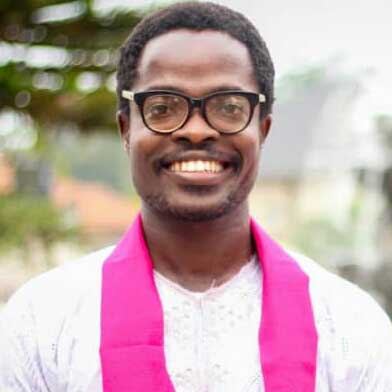
DR BAY OMOTOSHO
I previously served as a Lecturer in Cyber Security at the School of Engineering and Computing at the University of Central Lancashire.
I have undertaken postdoctoral research at the Chair of Software Engineering at the University of Potsdam in Brandenburg, the University of
Passau in Bavaria, and the Chair of Internet Technologies and Systems at the Hasso Plattner Institut in Brandenburg.
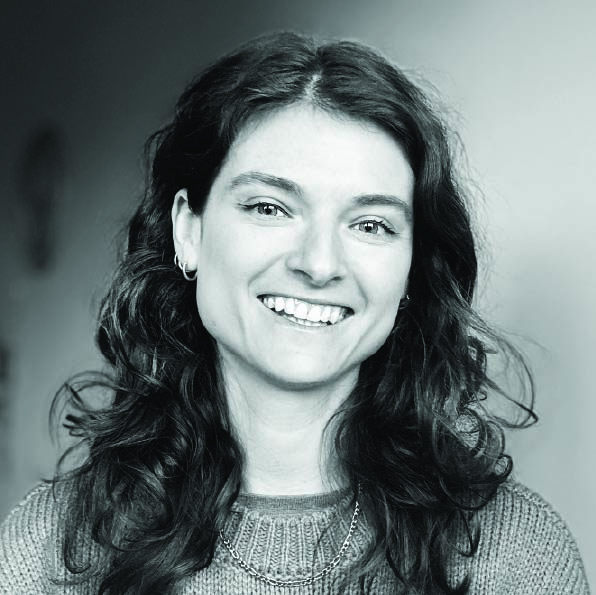
DR IMOGEN MANSFIELD
I recently completed my PhD at the University of Birmingham, where I led a four-year field study on plastic litter in bird nests. During my PhD,
I gained policy experience through a UKRI-funded internship at WRAP and industry experience through a Marie Skłodowska-Curie staff exchange with
NovaMechanics in Cyprus, contributing to the development of an AI-driven plastic identification app. My interests include environmental monitoring,
citizen science, and ornithology, with a commitment to accessible and open science.
MR MOHAMMAD CHIZARI
I am a PhD student in AI and Cyber Security. I am developing a comprehensive cybersecurity framework using AI-powered systems.
My areas of interest include AI and Machine Learning models, cybersecurity, app development, and data analytics.
As a research assistant, I contributed to the RUSTIK project on rural digital inclusion, where I developed the Smart Dashboard to support
community organisations in analysing and visualising their data. I developed a new metaheuristic algorithm called the Mouthbrooding Fish (MBF) Algorithm.
CLLR. GILL THOMAS
My appointment in 2024 as Stroud District Council’s first-ever Member Champion for Litter and Clean Environment has sparked a real war on waste across the district.
I work with local communities, schools and businesses — organising clean-up events, working with schools and promoting positive messaging about the impact of litter.
I Chair the Gloucestershire Resources and Waste Litter Working Group — a sub-committee I created to deliver a more collaborative approach to tackling litter across the county.
I am taking my work work to a national level, building partnerships with councils across the UK as we campaign to make the Voluntary Code of Practice for Food on the Go mandatory.
MR ERIC TORRINGTON
Since 2018, I’ve been a committed litter campaigner and advocate for real change. I use my industry skills to gather and
deliver data to decision-makers and calling for stronger waste-management and accountability across all litter-generating business sectors.
I believe in the power of hard-hitting evidence to drive real change, protecting the environment, wildlife, and, critically for me, our oceans.
By raising awareness and collaborating with local authorities, businesses, environmental groups and young people, I aim to build cleaner,
greener communities through government policy and corporate best-practice changes that put the environment at the heart of litter and waste
management decisions.
UNIVERSITY OF GLOUCESTERSHIRE
CONTACT: DR RICHARD COOK (Principal Investigator) rcook@glos.ac.uk
For press enquiries please contact the PI (above) via email